2K hardener: mixing ratio, pot life and common mistakes
Hardener is the product you buy without a second thought and the first thing you blame when a clear stays soft. Yet most problems come down to how it's measured, stored and chosen. Here's a quick run-through of what you need to know.
What hardener actually does
A 2K clear coat or primer is a resin that won't cure on its own. The hardener — isocyanate-based in the vast majority of polyurethane systems — reacts with that resin to form a solid network. This isn't drying by evaporation like a 1K paint: it's a chemical reaction. If the ratio is wrong, the reaction is incomplete, and no amount of baking will put it right.
That's why you don't swap one hardener for another on a whim. Each clear is formulated with its own hardeners, sometimes in several versions (fast, standard, slow) depending on the temperature and the size of the job. Mixing brands means risking a loss of gloss, yellowing or a film that stays soft.
The same reasoning applies to 2K primers. They often have their own hardener, with a different ratio from the clear's. Grabbing the clear coat hardener to activate a primer because it happens to be on the shelf is a classic end-of-week move, and it's rarely a good idea. A quick look at the label and the primer's technical data sheet before pouring saves a lot of rework.
Reading and sticking to the mixing ratio
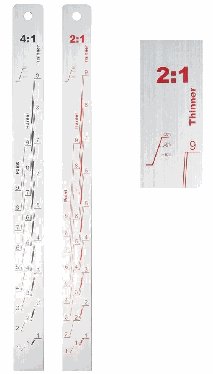
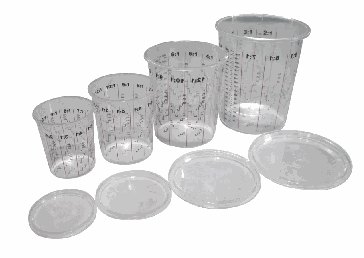
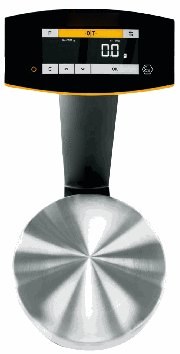
The ratio is given by volume (2:1, 3:1, 4:1...) or by weight. By volume, you work with a graduated cup or a mixing stick: pour the clear up to the first line, the hardener up to the matching line, then any thinner. By weight, you use scales with a tare function and follow the formula on the data sheet. Both methods work, as long as you don't mix the two.
A common mistake: reading the wrong column on the mixing stick. A mixing stick often carries two ratios, one on each side. Get into the habit of checking the ratio printed at the top of the column before pouring. Another trap: the bottom of the cup. Leftover mix from yesterday, even if it looks dry, can throw out a small batch.
And mix thoroughly. Hardener is thinner than resin and tends to stay on top. A solid minute of stirring, scraping the sides, isn't time wasted.
Pot life and the effect of temperature
As soon as the hardener meets the resin, the reaction starts. Pot life is the time during which the mix can still be sprayed properly. For many 2K clears it's measured in hours at 20 °C — but the technical data sheet is the reference, and that figure drops quickly when it's hot.
As a rule, every 10 °C rise speeds up the reaction considerably. A mix that lasts two hours in spring can thicken in the gun cup in the middle of August, in a booth that climbs to 30 °C. That's where slow hardeners come in, when the manufacturer offers them: they give you more time to lay the material down and get better flow on a large panel.
Only mix what you're going to spray. Leftover mix that has thickened can't be rescued with thinner: you'll end up with an over-thinned, partly cross-linked clear that flows badly and doesn't last as well.
Storage: moisture is the enemy
Isocyanates react with water, including moisture in the air. A tin that hasn't been closed properly turns cloudy, forms a skin or crystals, and ends up as gel at the bottom. Cloudy hardener must not be used any more: it has already partly reacted and the ratio no longer means anything.
Close the tin straight after use, wipe the thread so the cap seals properly, and store it somewhere dry, away from frost and heat. For a small shop that doesn't use much, it's better to buy smaller sizes and finish them quickly than to keep a large opened tin going for months.
Rotate your stock: first in, first out. Write the opening date on the label with a marker — it's a habit that costs nothing. And if a clear cures badly for no obvious reason, check the state of the hardener before blaming the booth or the clear. In many cases, a tin that's been open too long at the back of a damp cupboard explains everything.
The mistakes we see most often
Adding extra hardener to make it dry faster is mistake number one. Too much hardener doesn't make it harder: it leaves free isocyanates, makes the film brittle, can reduce gloss and cause adhesion problems for the following coats. Conversely, too little hardener gives a soft film that marks under a fingertip and scratches when polished.
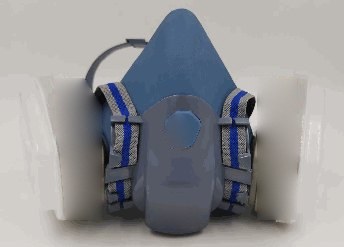
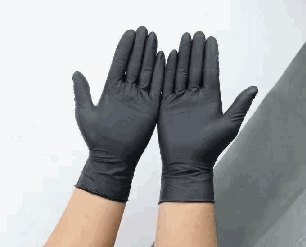
Another mistake: choosing a fast hardener for a full vehicle in hot weather. You save ten minutes of curing and lose the finish, with a clear that dries before it has flowed out. Finally, don't forget protection. Isocyanates are respiratory sensitisers: a suitable mask, nitrile gloves and ventilation, even for a small touch-up.
- Too much hardener: brittle film, loss of gloss
- Too little hardener: soft film, scratches when polishing
- Cloudy or gelled hardener: throw it away
- Hardener from another brand: unpredictable results
In the Humming range
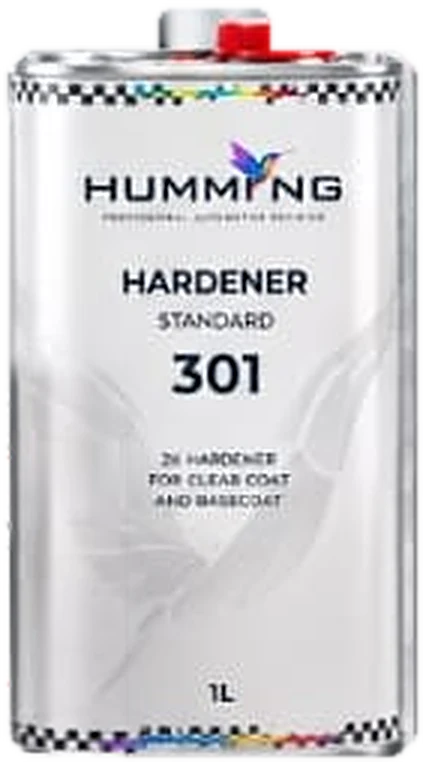
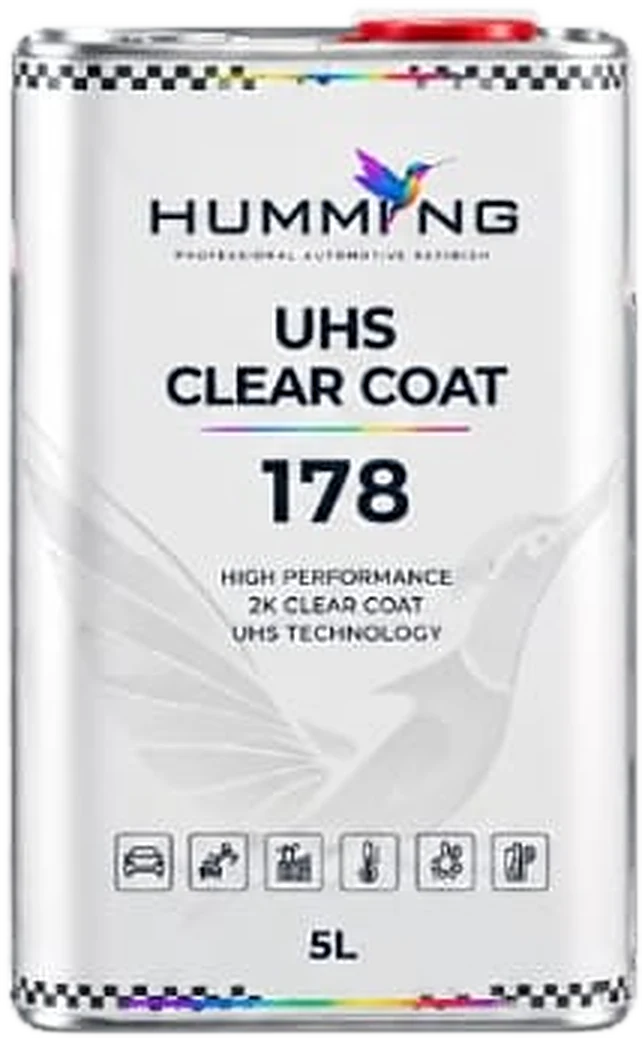
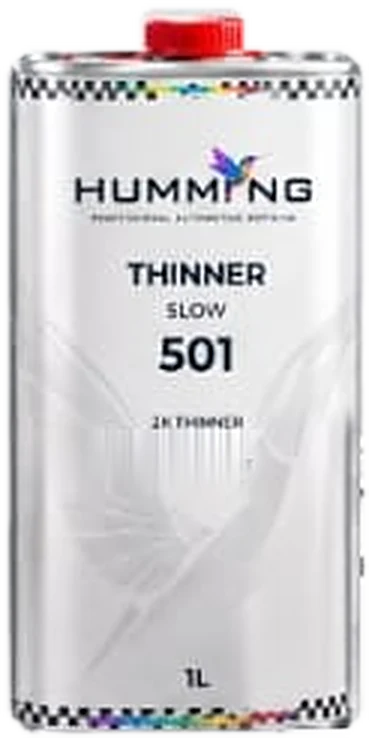
The 301 standard 2K hardener (1 L and 2.5 L) is the hardener for the UHS 178 clear coat, designed for normal workshop conditions; the 501 thinner completes the system. To measure accurately, the MEL-103 mixing stick, the MEL-106 graduated cups and the MEL-115 mixing scales do the job, while the EPI-103 nitrile gloves and the EPI-102 half mask protect the painter. Ask your Humming distributor for the technical data sheet for the 178 and 301 pairing before your first mix.
The values given here are workshop guidelines. The product's technical data sheet always takes precedence.