Dust-free sanding: health, quality and choosing an extraction unit
We've all known the workshop where everything is grey, nostrils included. Dust-free sanding isn't a luxury for big bodyshops: it's a question of health, paint quality and, in the end, money. Here's how to approach it and choose your equipment.
Health first
Dust from sanding body filler, primer and clear coat is fine, and a good part of it stays suspended in the air for a long time. It contains resins, mineral fillers, sometimes pigments and residues of 2K products. Breathed in day after day, it irritates the airways, and prevention bodies such as the INRS in France recommend capturing it at source rather than relying on masks alone.
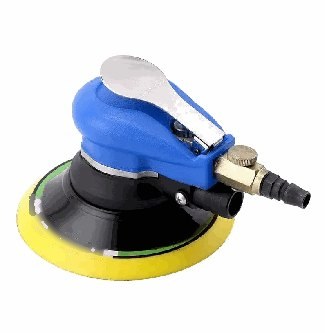
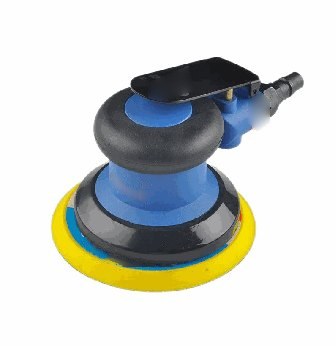
Capture at source is exactly what a dust-extracted sander does: air is drawn through the holes in the disc and the pad, and the dust goes into the extraction unit instead of floating around the workshop. A mask is still useful for certain jobs, but it protects neither colleagues walking past nor the panel beater when he takes it off for a coffee.
Better quality work
An abrasive working without dust cuts better and for longer. Dust left under the disc forms pills, clogs the grit and scratches the surface. With extraction, you get a more even scratch pattern, you can see the state of the surface at all times, and you spot defects without having to blow off every two minutes.
The other benefit shows up in the booth. Less dust in the workshop means less dust on vehicles, on painters' clothes and in the filters. Dust nibs in the clear coat often come from the workshop, not the booth. A clean workshop means less polishing after painting.
Working out the return
The return comes from several areas at once. Abrasives last longer because they don't clog. Sanding goes faster because you can see what you're doing. Cleaning the bay and the vehicle takes less time. And rework of dust-related paint defects goes down. Taken separately, each gain looks small; added up over a year, they count.
A simple example: if each panel beater saves twenty minutes a day between sanding, cleaning and rework, that adds up to several dozen hours a year per bay. Do the sum with your own labour rate; it's often that figure that settles it.
There's also a less visible effect: the image of the workshop. A customer collecting their car who finds a clean workshop, with no layer of dust on the benches, has more confidence in the quality of the work. And when it comes to recruiting, a clean, healthy workplace matters more and more to young panel technicians. It's not an argument you can easily put a figure on, but it counts when someone is choosing between two workshops.
Finally, extracted sanding changes the way filler is worked. You sand dry and by machine more often, with more consistent grits, and you avoid wet sanding body filler, which lets moisture into the polyester and can cause blistering later.
Choosing the right extraction unit
First choice: pneumatic or electric. A unit that supplies air sanders needs an air network that can keep up, with enough flow and pressure and clean, dry air. Electric sanders don't need compressed air and are easier on the operator over large panels; many units accept both.
Next, suction power and filtration. A more powerful turbine keeps good airflow even with a long hose and a half-full bag. Filtration determines what comes out of the machine: multi-layer filtration returns clean air to the workshop, which is the whole point. Adjustable suction stops the block sticking to the panel during fine sanding.
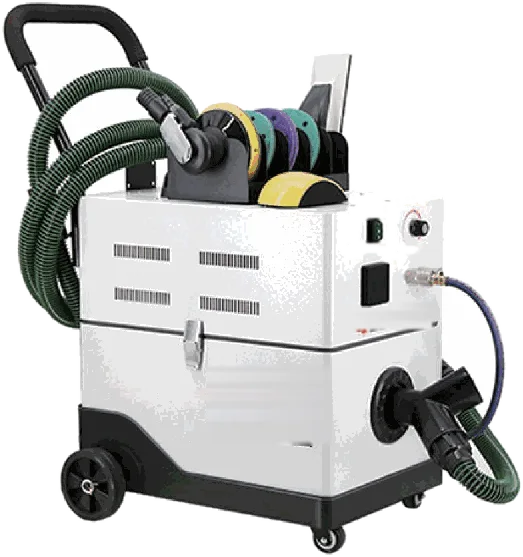
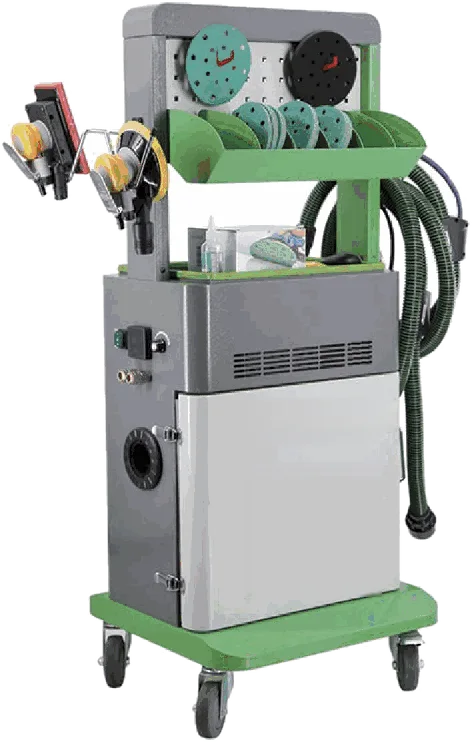
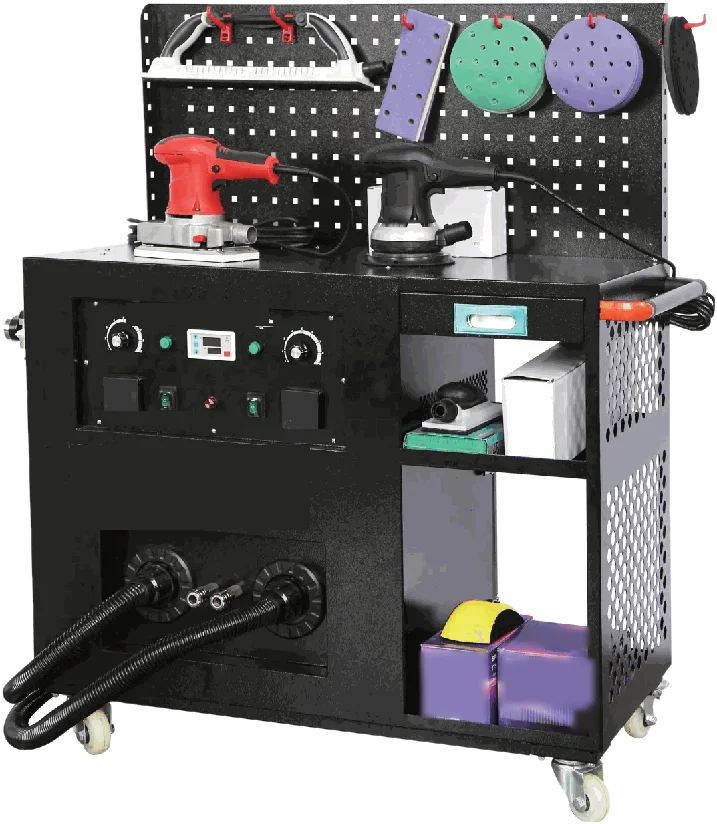
Lastly, the format. A mobile unit on a trolley follows the panel beater from one vehicle to the next. A sanding workbench combines extraction, abrasive storage and tools at a single station, very handy for preparing small parts. For a workshop with several bays, you can consider a centralised installation, more expensive but with no cables trailing around.
- Pneumatic, electric or both
- Suction power and adjustment
- Filtration and ease of emptying
- Mobile, workbench or centralised format
The accessories that make the difference
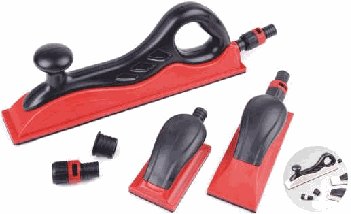
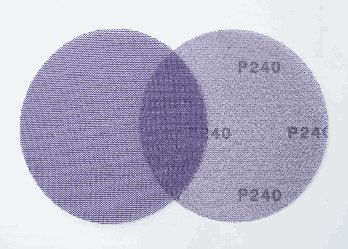
An extraction unit is only as good as what you plug into it. Abrasives must be perforated to match the pad or, better still, mesh-backed so air passes through the whole surface. Dust-extraction hand blocks are essential for flat surfaces and hand finishing. And a 2-in-1 hose, which delivers air and takes away dust in the same sleeve, stops hoses getting tangled around the vehicle.
Think about consumables too: bags, filters and carbon brushes for electric models. A unit with a clogged filter loses most of its efficiency, and people end up unplugging it. Keep a small stock of wear parts and empty the drum regularly, at the end of each week for example, rather than waiting for the suction to drop off.
Dust-free sanding from Humming
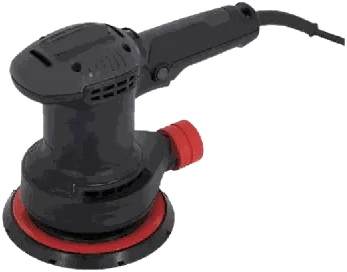
Humming Equipment offers the HE-P301 mobile extraction unit (1,600 W, 50 L drum, 5-layer filtration), the HE-P302 and HE-P303 extractors, the HE-P304 station on a mobile cabinet and the HE-P305 sanding workbench (2,000 W, stated capture rate above 95%). On the tool side, there are the HE-P306 electric sanders and the OUT-103 and OUT-104 air sanders, the ABR-107 dust-extraction block, the ABR-117 and ABR-118 mesh abrasives and the HE-A703 consumables. Your Humming distributor can show you the pneumatic and electric packs.
The values given here are workshop guidelines. The product's technical data sheet always takes precedence.