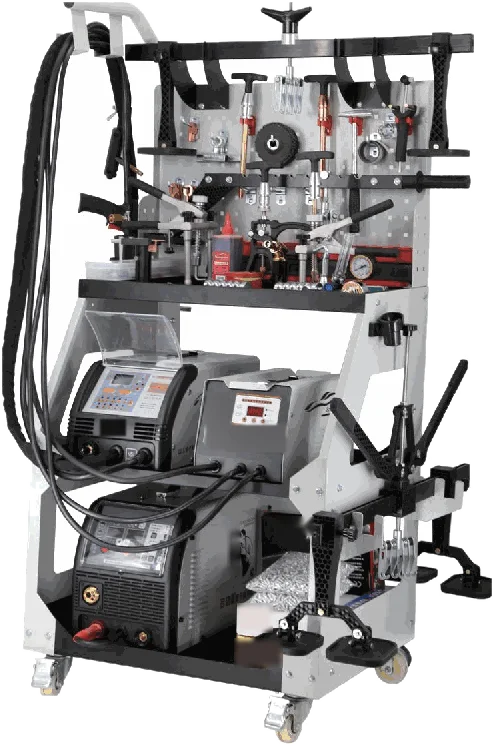
Aluminium dent repair: capacitor discharge, studs, precautions
Bonnets, doors, wings, tailgates: aluminium is everywhere on recent vehicles. It can be pulled, but not like steel. It needs a dedicated machine, separate tools and a little more patience. Here's how it's done.
Why aluminium changes everything
Aluminium conducts electricity and heat very well. That's precisely why a steel spotter doesn't work on it: the current passes through the panel without heating it enough to weld. You need a different process, capacitor discharge stud welding.
Next, aluminium doesn't have the same shape memory as steel. It work-hardens quickly, meaning it gets harder the more it's worked, and ends up cracking if you persist. It doesn't change colour when heated, which makes overheating hard to see. And it melts at a much lower temperature than steel. All this calls for a gentler method: pull progressively, relieve the stresses, heat moderately and check.
How capacitor discharge works
The unit charges a bank of capacitors, often more than 100,000 µF, to an adjustable voltage, usually between 50 and 90 V depending on the machine. When triggered, all this energy discharges in a few milliseconds through the stud placed on the panel. The tip of the stud melts and welds to the surface, without having time to heat the surrounding panel.
This very short time is what makes the process worthwhile: the heat-affected zone stays tiny and the back of the panel is barely marked. The studs are aluminium alloy, most often in M4, M5 or M6 diameters. You then screw a ring or adaptor onto them to pull with a slide hammer, pulling bridge or claw.
Setting the voltage and welding the studs
The voltage is chosen according to the stud diameter and the panel thickness. Always start with tests on an offcut of the same thickness or on a hidden area. The right setting gives a stud that holds firmly and doesn't come away when bent. Too low and it breaks on the first pull; too high and it burns through or marks the opposite face.
The surface must be clean at the contact point. There's no need to strip a large area as with a steel spotter, but you clean the weld spot locally, usually with the cleaning discs supplied with the unit, following the instructions. Hold the torch square to the panel, and pull progressively, on several studs at once if needed, easing off from time to time to let the panel relax.
On units with an automatic torch, the stud welds as soon as it touches the panel; in manual mode, you have to press the button. Manual is often more comfortable for placing studs precisely along a pulling line.
Once the shape is restored, cut the studs off flush with side cutters, then level what's left with a file or an abrasive reserved for aluminium, without digging into the panel. The weld spot is small, and a light finish is usually enough before primer. On a long deformation, you can weld a row of studs and link them with a pulling bar to spread the load: the panel comes up more evenly than when pulling spot by spot, and you reduce the risk of marking the surface between two studs.
Heat with care
A little heat helps aluminium to be worked and reduces the risk of cracking. But with no colour change, you're heating blind. Panel beaters who work aluminium use a temperature crayon or an infrared thermometer, and generally stay well below 200 °C, unless the manufacturer says otherwise. Manufacturers' repair methods often give precise limits, and some alloys or parts must not be heated at all.
A heat gun is the most common tool for this moderate heating. One tip: keep the nozzle moving and check regularly, as OEM paint doesn't take kindly to local overheating.
Separate tools, a clean area
This is the rule most often forgotten. A steel particle embedded in aluminium, left by a hammer, dolly, file or disc that has been used on steel, causes galvanic corrosion. It doesn't show straight away: it comes through a few months later as blisters under the paint. Aluminium tools must therefore be kept for aluminium only, and ideally stored separately.
Aluminium dust also poses a specific risk. It is flammable and, mixed with steel dust, can become dangerous. It must not be extracted with just any vacuum or in the same drum as steel dust, and steel grinding sparks should be kept away. Many workshops set aside a bay or an area for aluminium only.
Finally, not everything can be repaired. A tear, a crack that appears during pulling or damage to an alloy structural part often calls for replacement according to the manufacturer's method. Better to know that before you start than to find out after an hour of pulling.
- Hammers, dollies, files and abrasives kept for aluminium
- Extraction kept separate from steel dust
- Temperature checked every time you heat
- Manufacturer's method consulted before repair
From Humming Equipment
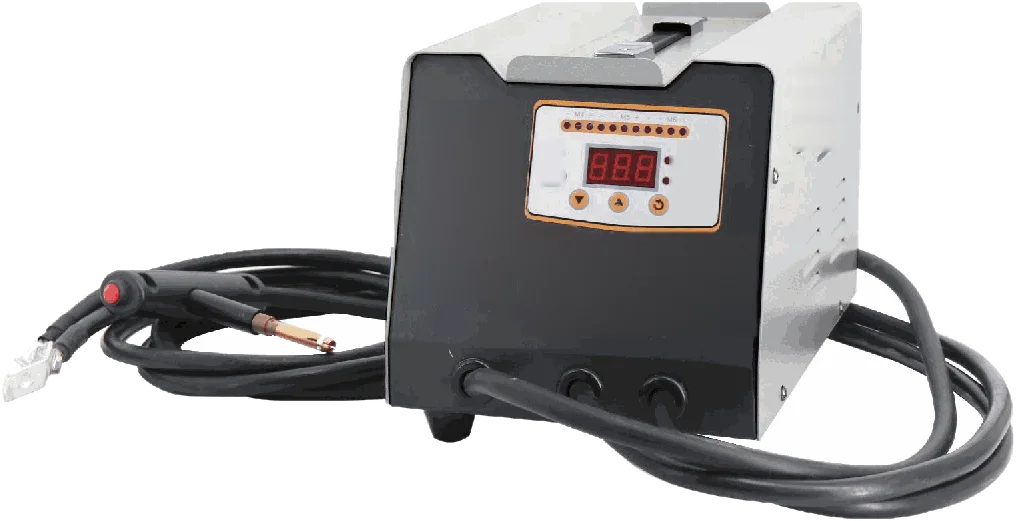
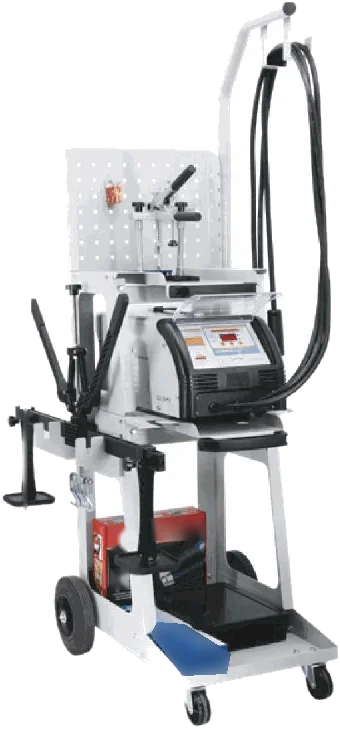
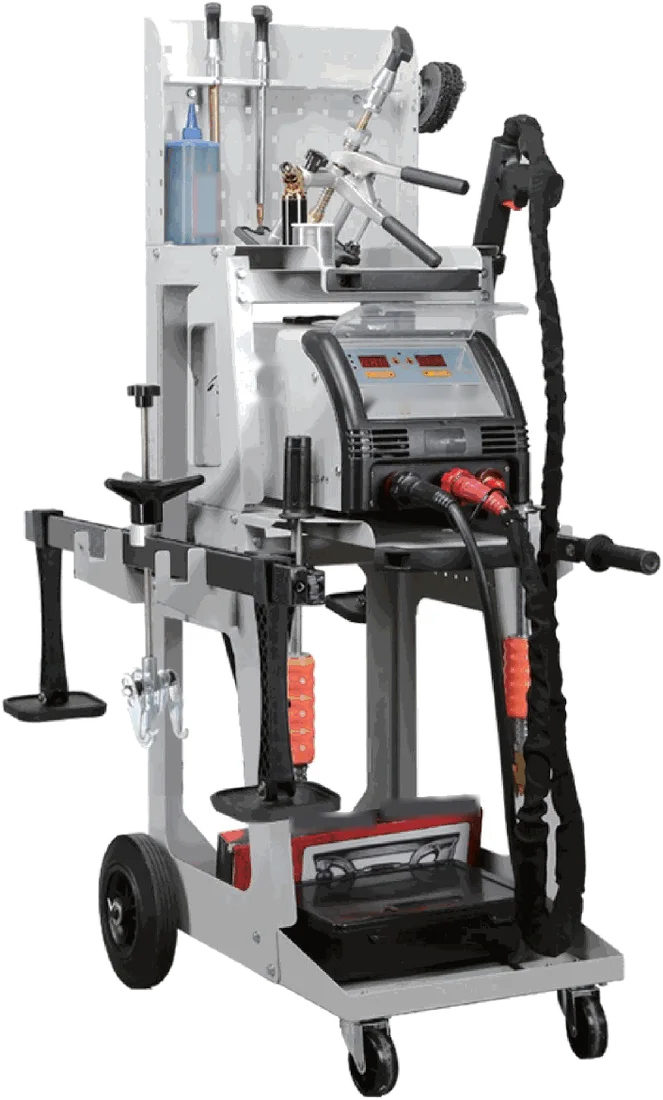
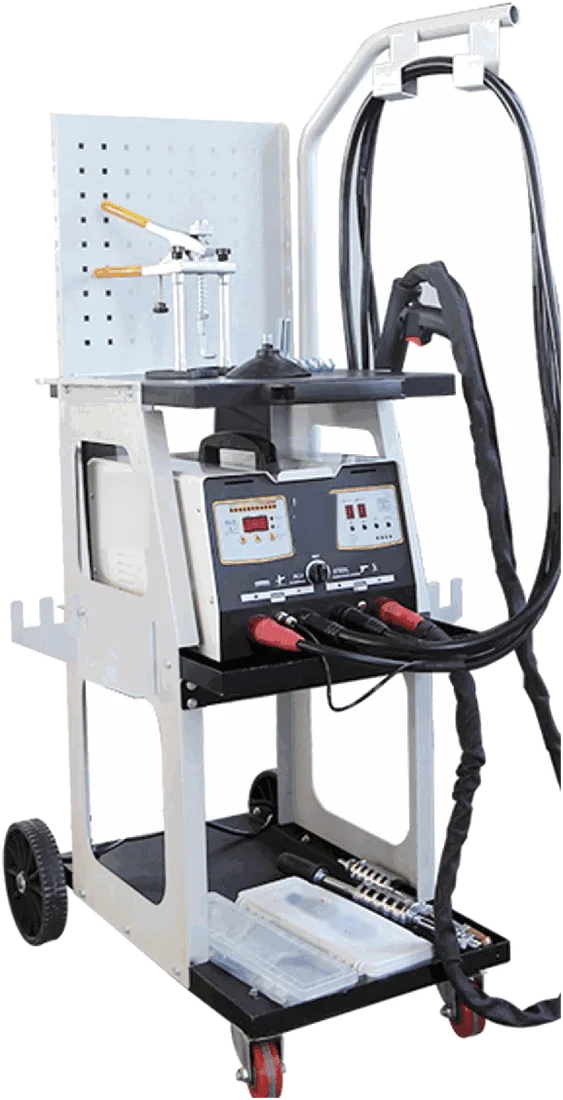
The HE-D117 portable unit (120,000 µF, M4 to M6 studs, 3 ms weld, 60 to 90 V) and the HE-D119 trolley station (140,000 µF, 10,000 A short-circuit) are dedicated to aluminium and supplied with 300 studs, rings, a pulling bridge and cleaning discs. If you work on both materials, the HE-D113 and HE-D114 2-in-1 stations combine a steel gun and an aluminium gun, and the HE-D120 centre adds a MIG module. Talk to your Humming distributor to choose according to your workload.
The values given here are workshop guidelines. The product's technical data sheet always takes precedence.