Pulling posts and pulling systems: principles and good practice
A pushed-in sill or a door folded by a post can't be put right with a hammer alone. You need to pull, with the right force, in the right direction, without damaging anything else. That's the job of pulling posts and pulling systems, provided they're used methodically.
The principle: take the panel back along the path of the impact
A panel deformed by an impact has followed a path: it has been pushed, folded, sometimes stretched. To straighten it, you apply a force in the opposite direction, starting with the last deformation created, which is the deepest. Pulling at random or too quickly creates new deformations instead of undoing the existing ones.
Before pulling, take the time to read the damage. Where did the impact come from, what area was hit, what folds have formed around it? On a door, also look at alignment with the neighbouring panels, the gaps and the flush. This two-minute diagnosis saves you pulling in the wrong direction for half an hour.
Post, jack or ram: which system for which job
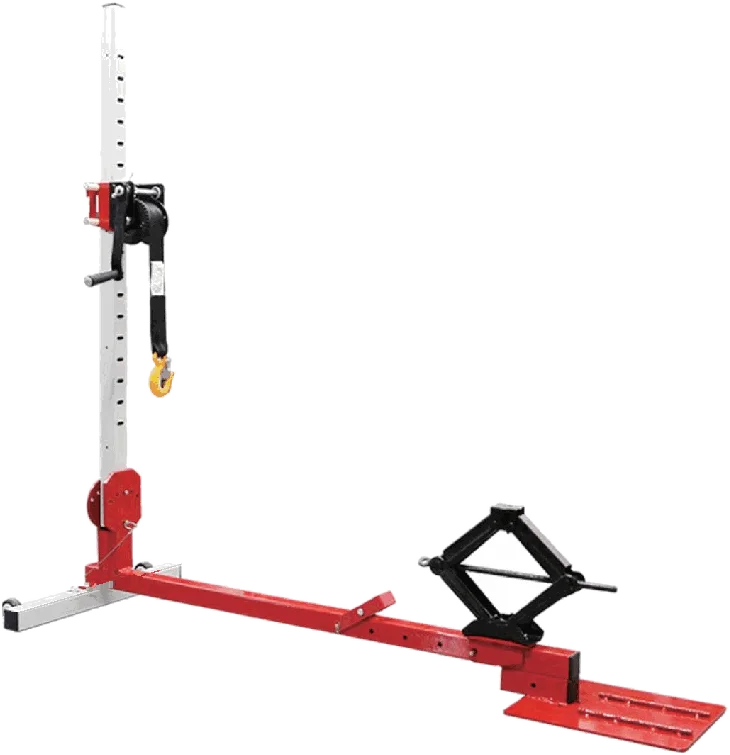
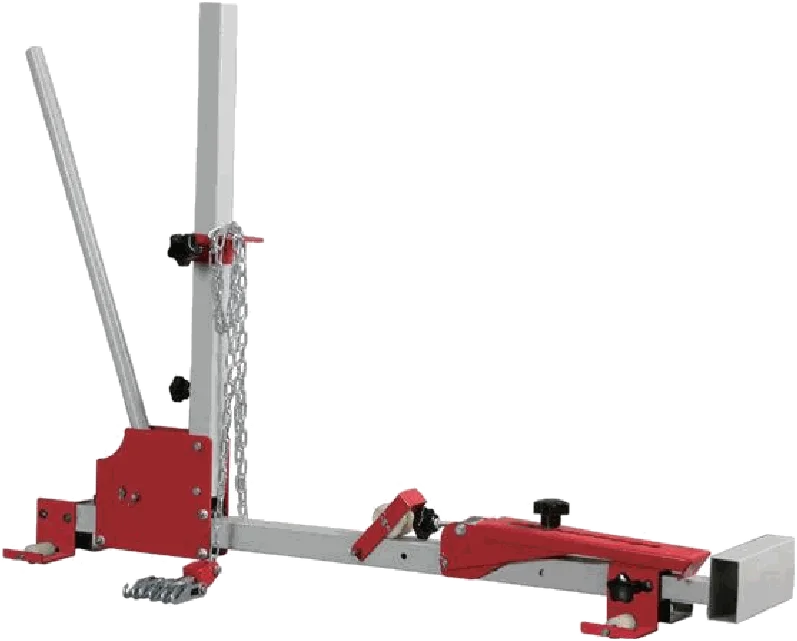
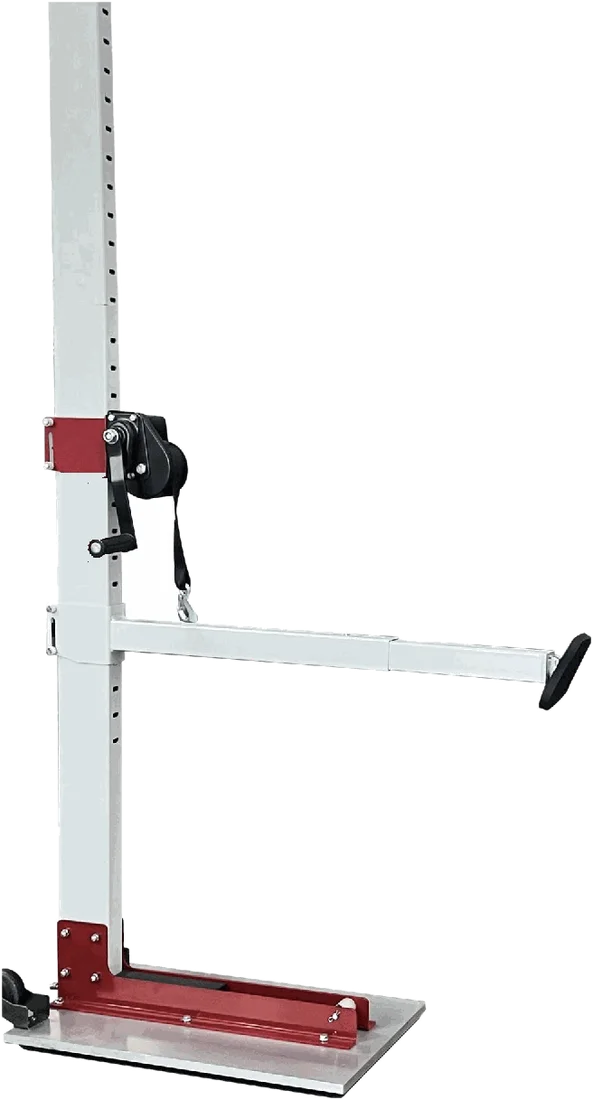
The winch pulling post is the tool for light to medium body damage: sills, doors, sides. It braces under the wheel or on the floor, and the hand-cranked winch with strap or chain lets you control the force finely. Models that swivel or slide on a rail can be positioned facing the damage without moving the vehicle.
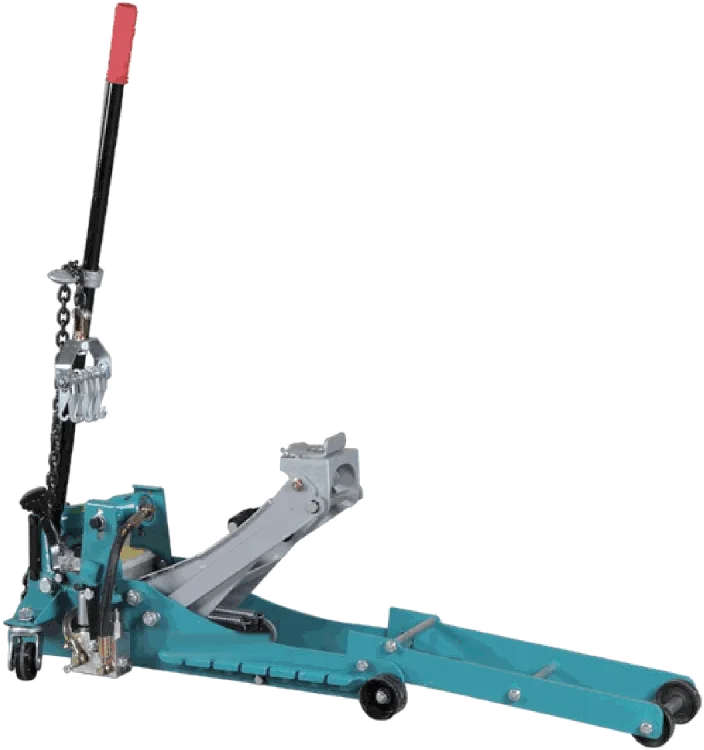
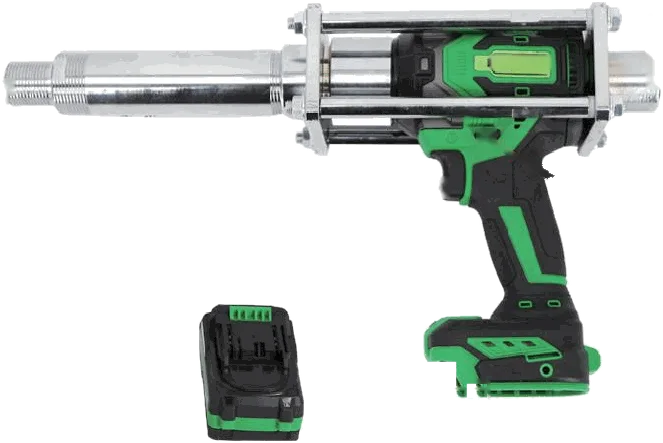
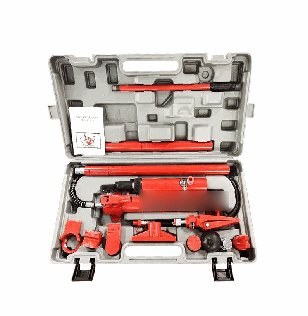
A hydraulic pulling system based on a jack provides more force, around one tonne, with a familiar pumping action. It suits panels that put up more resistance. For confined areas, such as a door pillar or an aperture, a portable push or pull ram works inside the body shell itself, with no set-up.
None of these tools replaces a straightening bench and structural measuring when a chassis leg, a pillar or a suspension mounting point has been hit. If the impact may have moved structural dimensions, the vehicle goes on the bench, using the manufacturer's method and dimensions.
Anchor, pull, relieve: the method
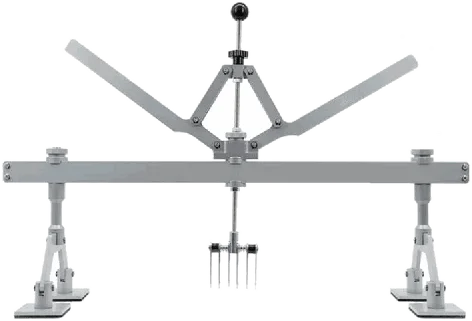
The hold must be strong and well spread. Depending on the area, you pull with a multi-tooth claw on an edge, with a pulling bridge, with washers or a wiggle wire welded on with the spotter, or with several points linked together. The more the load is spread, the less risk of tearing the panel or ripping off the spots.
Pull in stages. Apply tension, observe, then work the surrounding metal with a hammer or punch while it's under tension. This is what's called relieving: the folds that have memorised the impact relax, and the panel follows the pull instead of fighting it. Ease off a little, start again. Pulling in one go to the final shape almost always gives an overshoot or a stretched panel.
The rear roller or pulley is used to direct the pull towards the low area: that's often where a sill pull succeeds or fails, as the ideal direction isn't horizontal.
Take a door pushed in at the middle by a bollard. Weld a row of washers or a wiggle wire along the main fold, hook on the claw, and put the post under light tension. While the strap holds, tap gently with a planishing hammer on the high edges of the fold, around the low spot. The low spot rises as the edges relax. Increase the tension a notch and start again. In ten or fifteen minutes, the general shape comes back, leaving only light finishing work with the spotter and hammer.
Safety around a chain under tension
A chain or strap under tension stores a lot of energy. If a claw slips or a spot gives way, it lashes out like a whip. Never stand in line with the pull, don't lean over it, and check the condition of straps, hooks and claws before every pull. A safety cable or a blanket laid over the chain limits the whiplash.
The vehicle must be stable: chocked, handbrake on and, for posts that brace under the wheel, correctly positioned on the base plate. A post that tips over during a pull is a danger to the operator and to the bodywork.
- Never in line with a tensioned chain or strap
- Claws, hooks and straps checked before use
- Vehicle chocked and stable during the pull
- Bench and measuring as soon as the structure is affected
Modern steels change old habits
Recent body shells use high-strength and ultra-high-strength steels, particularly in the pillars, sills and reinforcements. They are harder, spring back less readily and don't tolerate heat well. Heating a reinforcement to straighten it more easily, as was done on older panels, can make it lose its mechanical properties. Most manufacturers prohibit this on certain parts and specify replacement beyond a certain level of deformation.
Before pulling on a structural part, check the manufacturer's repair method. It tells you what can be straightened, what must be replaced, and how.
Pulling equipment from Humming Equipment
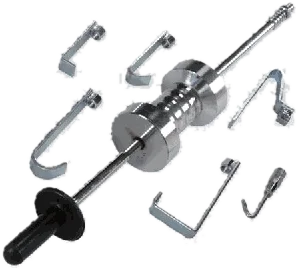
The range includes the HE-D129 rail-mounted post (200 kg, 120° swivel), the HE-D131 dismountable post (200 kg), the HE-D132 pneumatic suction-base post that anchors to the floor without bracing on the vehicle, and the HE-D130 jack-based hydraulic system (1.2 t). For confined areas, there's the HE-D122 portable ram (5 t) and the OUT-107 ram kit, complemented by the HE-D128 bridges and the HE-D126 slide hammer. Your Humming distributor will help you put together the right pulling bay.
The values given here are workshop guidelines. The product's technical data sheet always takes precedence.