Bodyshop masking: tapes, papers, films and foam tape
Good masking goes unnoticed. Bad masking shows straight away: a line of clear on a rubber seal, a paint line that bleeds, adhesive left on a chrome trim. Choosing the right product for each area saves time when demasking and on rework.
Tapes: temperature first
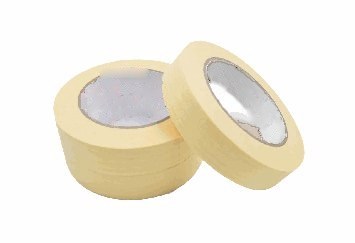
The first thing to look at in a masking tape is the temperature it can withstand. A 2K clear is baked in the booth at around 60 °C, and an infrared lamp can take the surface much higher locally. A tape rated for 80 °C for 30 minutes is enough for everyday booth work. For long bakes, infrared or substrates that get hot, use a 100 °C or 120 °C tape, which will come off without leaving adhesive behind.
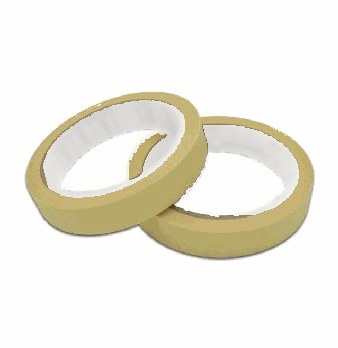
Next come thickness and adhesion. A thick, tacky crepe tape holds well on plastics and seals, but leaves a more pronounced step. A washi tape, made of thin, smooth paper, gives a sharper line and peels off more cleanly, which makes it a good choice for blend edges and colour lines. For fine lines and curves, such as a pinstripe or a two-tone, vinyl tape stretches and follows the curve without creasing.
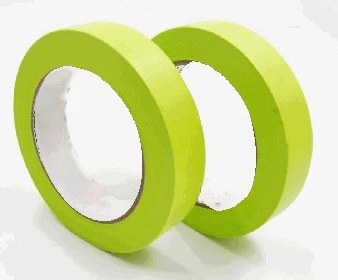
Coloured tapes aren't just about looks. In a shop where several painters work, giving each use its own colour prevents mistakes: the 80 °C tape for the booth, another for infrared, a third for masking in the prep area. It also makes it easier to spot a bit of tape left under a seal when demasking. UV-resistant tape, for its part, is for when a masked vehicle has to wait outside or near a glazed wall: ordinary tape baked in the sun becomes hard to remove.
Paper or film: covering large areas
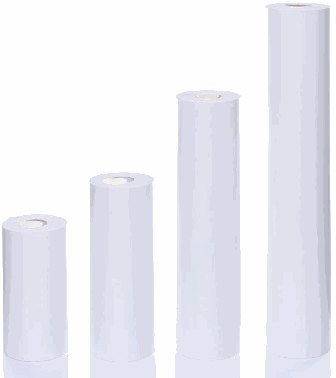
To cover around the area being painted, you can choose between paper and film. Masking paper, white coated or kraft, is easy to handle, pairs with tape in a dispenser and absorbs a little overspray without letting it run. It's suitable for medium-sized areas: windows, headlights, neighbouring panels.
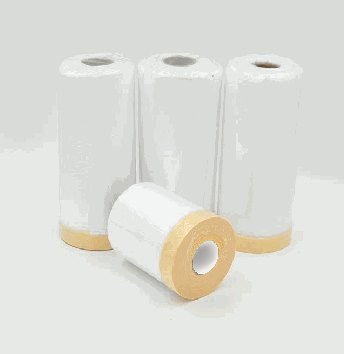
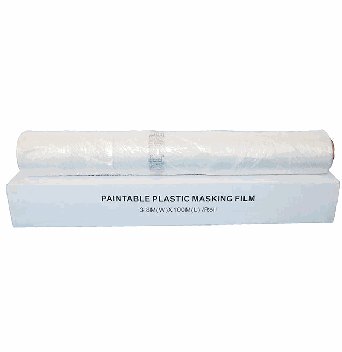
Polyethylene masking film is unbeatable on large areas: a full vehicle can be covered in a few minutes, then you cut out the area to be painted with a knife. An electrostatic film treated to hold paint stops dry overspray from falling back onto the job as dust. Pre-taped film, with built-in tape, is very handy for quickly masking a door or a sill.
Pre-taped kraft paper with washi tape is a good compromise for windows and straight-edged areas: a single movement applies both paper and tape. When choosing between paper and film, look mainly at the time spent. If a painter takes twenty minutes to mask a vehicle with paper where a full-vehicle film would take five, the maths is easy.
Foam tape for door and boot apertures
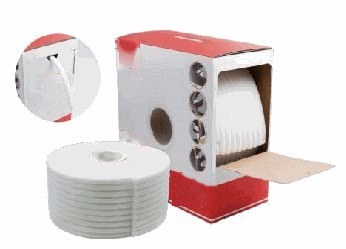
When you paint a door, a bonnet or a tailgate, you can't mask the inside with tape without creating a hard line on the edge. Aperture foam tape is stuck set back inside the opening: the paint fades out on the foam and forms a soft edge, with no step, invisible once the door or panel is closed.
The foam tape goes on before closing the door or panel, stuck to the body side, just set back from the flange. A foam tape that comes off without adhesive residue saves a tedious clean-up of the seals after baking.
Protecting the interior and the vehicle
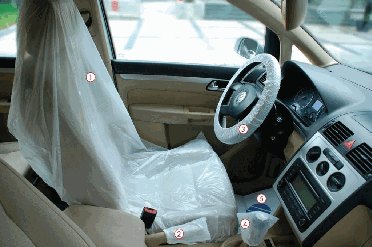
When customers collect their car, they don't just look at the paint. A seat smeared with filler or a greasy steering wheel loses you a customer more surely than a small dirt nib in the clear. Seat cover, steering wheel cover, paper floor mat: these disposable protectors go on as soon as the vehicle arrives in the shop, before it's moved anywhere.
For a vehicle waiting outside or sitting in a sanding area, a thin plastic sheet protects it from dust. Think about wheels, callipers and wheel arches too if you're painting a wing or a sill: overspray on a diamond-cut alloy doesn't come off easily.
Masking well: a few techniques
Mask onto a clean, degreased surface, otherwise the tape lifts during the bake and paint gets underneath. Press the edge of the tape down firmly with a fingernail or a spreader, especially on seals and curves. Demask while the clear is still slightly warm, pulling the tape back towards you at a sharp angle for a clean line.
For blends, the reverse masking technique, with the tape folded back so the adhesive faces out at the edge, avoids a hard step of primer or basecoat. And on big jobs, a paper or film dispenser with a magnetic cutter saves a considerable amount of time.
- 80 °C: standard booth, short bake
- 100 to 120 °C: long bake and infrared
- Washi: sharp lines and blends
- Vinyl: fine lines and curves
Masking from Humming
The range covers all three temperature levels with, for example, the MSQ-103 80 °C automotive tape, the MSQ-106 100 °C washi tape and the MSQ-110 120 °C high-temperature tape, plus the MSQ-121 vinyl tape for fine lines. For covering, the MSQ-112 paper, the MSQ-111 pre-taped film and the MSQ-114 full-vehicle film. The MSQ-120 foam tape handles door and boot apertures, and the MSQ-117 5-in-1 kit protects the interior. The whole range is available from your Humming distributor.
The values given here are workshop guidelines. The product's technical data sheet always takes precedence.